ABC of product marketing: positioning, messaging, and copy explained
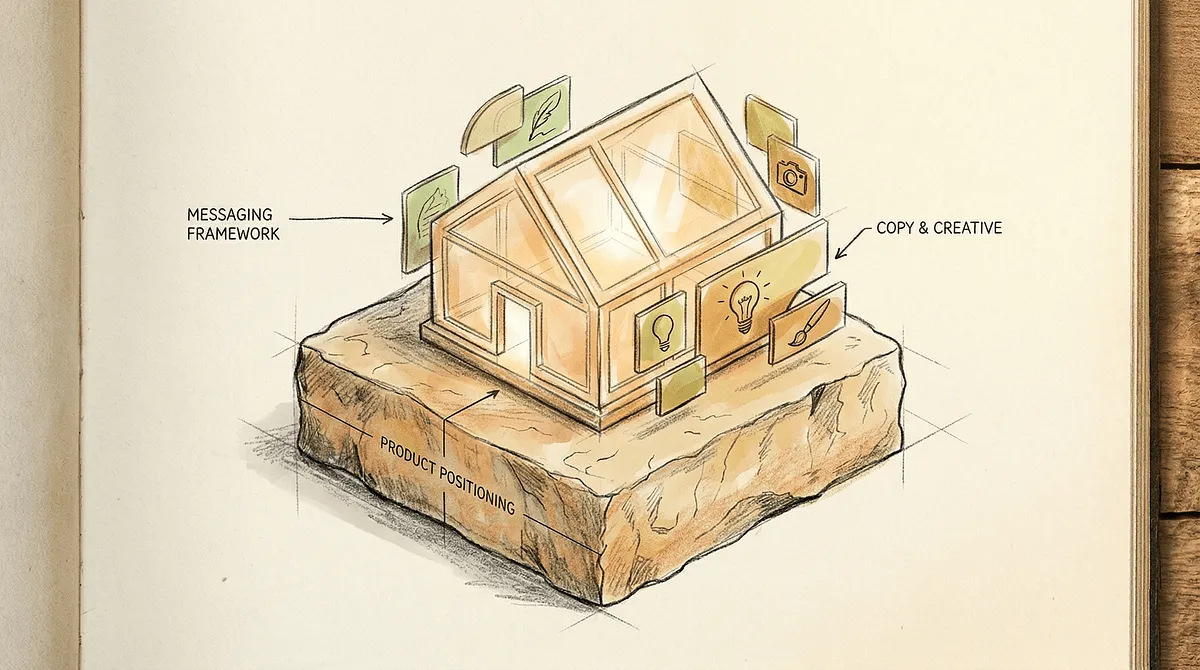
Product marketing is about figuring out your product’s unique story and how to tell it. The tricky part is that there are three layers: positioning, messaging, and copy. Each does a different job, and understanding the difference is the first step to getting any of them right.
I like to think of it like building a house. Positioning is the foundation, messaging is the structure, and copy is the decoration.
Positioning: the foundation
Positioning defines how a product is the best thing in the world at providing some value that a well-defined set of customers cares a lot about.
That’s a mouthful, so let me break it down. Positioning answers four questions:
- What is this product?
- Who is it for?
- What alternatives do those people have today?
- Why is this product better than those alternatives?
The output of positioning work is internal. Your customers never read your positioning document. Your sales team does. Your designers do. Your content writers do. Positioning is the shared understanding inside your company about what the product is and why it exists. If your team can’t agree on the answers to those four questions, everything that comes after will be inconsistent.
The reason I compare positioning to a foundation is that you can’t see it from the outside, but everything depends on it being solid. When the foundation is weak, every team ends up telling a slightly different story about the product. The website says one thing, the sales deck says another, and social media says something else entirely. That’s what happens when there’s no positioning underneath.
A good way to build positioning is through workshops with key stakeholders from product, marketing, and sales. Get the people who know the product, the market, and the customer in the same room, and work through the questions together. April Dunford’s positioning framework is a solid starting point for this (she wrote the book “Obviously Awesome” on the topic). The output should be a document that everyone involved can point to as the source of truth.
Messaging: the walls
Product messaging is how we communicate the value and relevance of our product to our target audience.
If positioning is the internal truth about your product, messaging is the external version of that truth. It’s what you want to say to the market. Messaging takes the strategic decisions from your positioning and turns them into specific statements: what are the key benefits you lead with, what’s the narrative, what’s the hierarchy of things you want to communicate, and in what order?
This is where you decide things like which features to emphasize, what emotional territory the product should own, and what language to use when talking about it. Messaging should be specific enough that two different writers could read the same messaging document and produce content that tells the same story, even if their writing styles are completely different.
The house metaphor works here because the house is what people actually see. When someone walks past your house, they see the structure, the shape, the size. They don’t see the foundation, but the foundation determines whether the house stands. Same with messaging: your audience sees your messaging (through your content, ads, product pages), but the positioning underneath is what makes it hold together.
One practical point: messaging should be tailored to different audiences if you have them. The way you talk about a product to a technical buyer is different from how you talk about it to someone who’s never used anything like it before. The positioning stays the same; the messaging adapts.
Copy: the decoration
Copy is the creative execution of your messaging. It’s the actual words your audience reads on a landing page, in an email, on a social media post, on product packaging.
If messaging says “we need to communicate that this product is the most secure option for people who want full control of their assets,” copy is the headline, the paragraph, the call to action that makes that message land with a specific reader in a specific context.
Copy is where personality comes through. Two companies with identical positioning and similar messaging will sound completely different at the copy level because copy is where voice, tone, and creativity live. It’s the paint colors, the furniture, the art on the walls. It’s what makes the house feel like somewhere you want to live.
The most common mistake I see is companies starting at the copy level. Someone writes a landing page or a product description without a messaging framework, which means without positioning underneath that. The copy might sound good on its own, but it won’t be consistent with what other teams are producing, and it won’t be grounded in any strategic decisions about what the product actually is and who it’s for.
Good copy comes from good messaging. Good messaging comes from good positioning. Skip a layer and the whole thing falls apart.
How the three layers work in practice
Here’s a simplified example of how this looks for a product launch.
You start with positioning. You run a workshop, you align on the target customer, the competitive alternatives, and the unique value your product delivers. You document it. This becomes the foundation everyone works from.
Then you build the messaging. Based on the positioning, you define the key messages, the feature hierarchy, the narrative. You write it down in a format that any team in the company can pick up and understand.
Then the different teams take that messaging and produce copy for their channels. The content team writes blog articles. The designer builds the product page. The social media manager writes posts. The PR team writes the press release. They all have different writing styles and different formats, but they’re all working from the same messaging, which is built on the same positioning.
The result is that everything says the same thing. The packaging matches the website, the website matches the launch video, the launch video matches the press release. That kind of alignment doesn’t happen by accident. It happens because the layers were built in the right order.