What SaaS product marketers get wrong about hardware
Five months before the Trezor Safe 5 launch, the hardware team walked over to my desk and asked where the final messaging was. The USPs, the narrative, the value props. All of it, locked down, ready for packaging.
I didn’t have it. In SaaS, five months before launch I’d still be arguing about the feature list. The messaging would come together in the final weeks, shaped by whatever the product looked like at that point. You could afford to wait because you could always update the website on Friday.
In hardware, the words on the box have to be right before the box exists. I was already late and didn’t know it yet.
I had spent three years marketing analytics software at GoodData and thought I understood product timelines. I did not understand hardware. Here’s what I had to unlearn after joining Trezor, in the order I learned it the hard way.
Iteration is not a strategy when the product is in a box
In SaaS, “we’ll fix it in the next sprint” is a load-bearing sentence. The whole culture rests on it. You ship something rough, watch how people use it, and improve. Bad onboarding flow? A/B test three new ones and pick the winner by the end of the month. Confusing label? Change it on Friday.
In hardware, the box is the box. You can’t redesign the unboxing experience after a million units have shipped. You can’t recall the printed quick-start card because the typography felt cramped. Whatever you put in that box will live in customers’ homes for years. Some customers will only ever read it once, on the day they open the package, and that one read will form their entire opinion of your brand.
The unlearning here isn’t “be more careful.” You have to stop treating the launch as the start of a feedback loop and start treating it as the end of one. The loop happens before manufacturing, with prototypes, test users, internal reviews, and more prototypes. By the time you’re shipping units, the iteration window for the physical product is closed. It already happened, and you either did the work or you didn’t.
Firmware is not software
This was the hardest one for me to accept emotionally. Firmware looks like software from a distance. It’s code, written by people who call themselves engineers, living in a repo with commits and pull requests and the usual apparatus. From the outside it could be any SaaS dev cycle.
It is not.
Firmware ships on a schedule that is half engineering, half compliance, half trust. (Yes, that’s three halves. That’s the joke.) Every release goes through review, security audit, signing, and a careful rollout, because if you brick a customer’s device with a bad update you don’t just have a bug. You have someone who can’t access their Bitcoin until you fix it, and who will tell every other customer about it on Reddit within the hour.
So the cadence is slow on purpose. SaaS PMMs come in expecting a release every two weeks and start planning launches around it, but hardware doesn’t work that way. Big firmware releases are rare events that actually matter, and you build comms around them the way you would build comms around a product launch in SaaS.
Trust is the product, not a feature of it
In SaaS, trust is something you earn over time. Bad release? Apologize, ship a fix, send a postmortem, move on. Customers grumble for a week and forget. The relationship is continuous, and continuity gives you slack.
In hardware, especially in security hardware, trust is the entire product. There is no version of “we lost some customer data but we’ve patched it” that survives the news cycle. A single supply chain compromise, a single firmware vulnerability, a single weird story about a device behaving strangely, and you’re not selling that product anymore. Maybe ever.
This changes what you market. SaaS PMMs are trained to lead with capability. In hardware security, capability is table stakes. The actual marketing job is making people feel that the company behind the device is the kind of company they want guarding their savings. That’s a different muscle, closer to brand work than feature work, and it takes years to build and minutes to break. Most SaaS PMMs don’t feel this until they live through one bad week.
Distribution stops being free
In SaaS, distribution is a URL. You launch and the entire planet can use the product before lunch. If a customer in Brazil wants in, they sign up and they’re in.
In hardware, every customer is a logistics problem. The product has to physically arrive somewhere, which means warehouses, freight, customs, returns, regional VAT, regional power adapters, regulators who want regional certifications. It means partnerships with retailers who have their own opinions about packaging dimensions and barcodes. It means deciding whether your launch markets are the ones with the best customers or the ones with the least painful import paperwork.
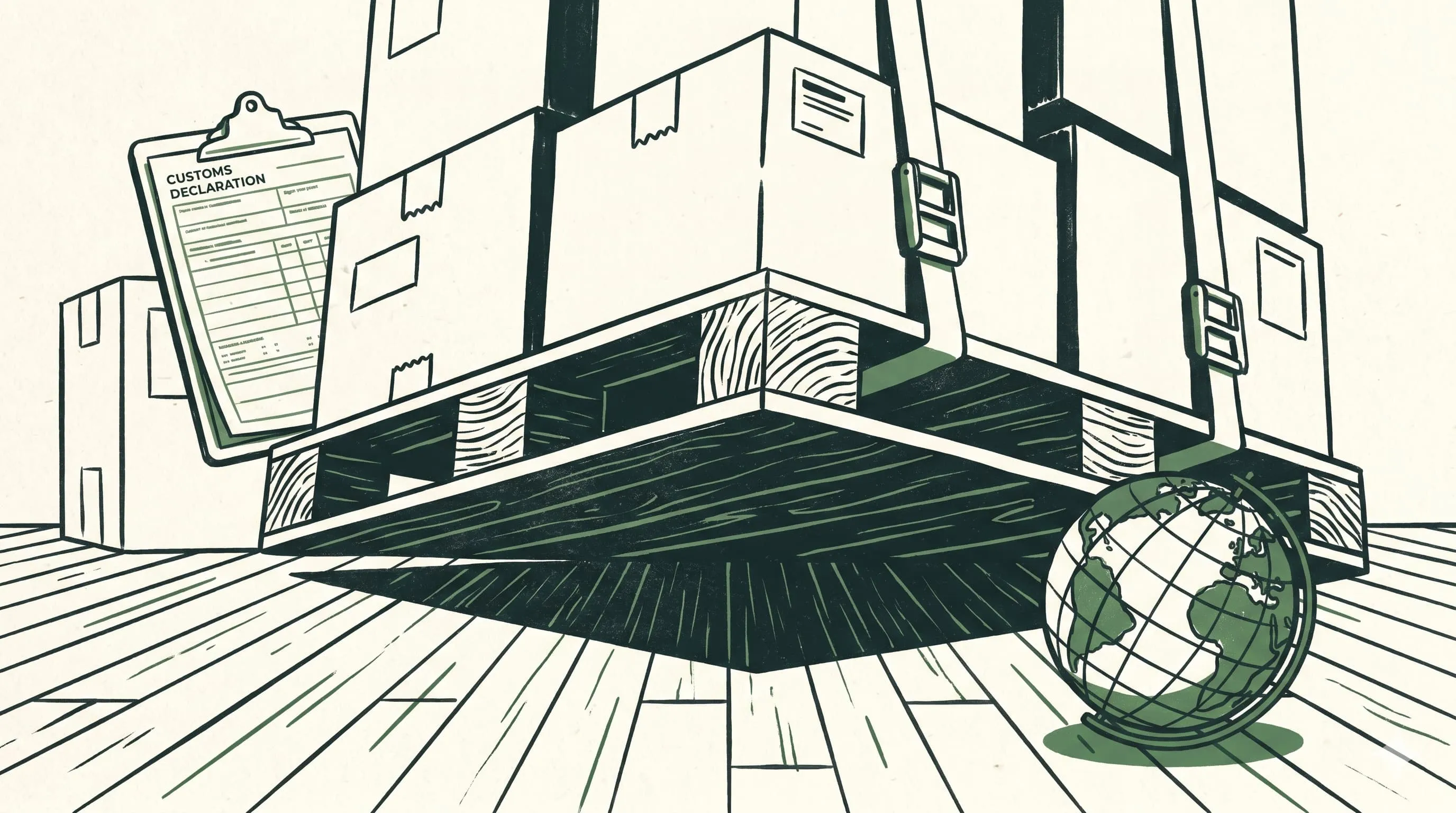
SaaS PMMs underestimate how much of hardware marketing is actually operations. You will spend more time talking about pallets than you ever expected. I’ve watched a launch timeline slip because a chip manufacturer quoted 12-to-14-week lead times and delivered in 30 to 40. A country’s customs policy will matter to you in ways you never imagined. The “go” in go-to-market means something physical now, and the physics is unforgiving.
The launch is not a campaign, it’s a season
In SaaS, a launch is a moment with a campaign around it. A blog post, an email blast, a webinar, a Tuesday in March, and then back to normal work. The product keeps evolving and you’ll have something new to market in six weeks anyway.
In hardware, a launch is a season. It starts months before any unit ships, with teasers and waitlists and influencer seeding, and it stretches months after, as the device works its way through reviewers, retailers, and the long tail of people who only buy after they’ve seen three friends recommend it. There is no “post-launch lull” where you go back to writing landing pages. The launch *is* the work, for a long time, and the next launch is probably eighteen months away.
Hardware PMMs have to think in much longer arcs. You can’t burn all your messaging in week one. You need a story that holds up for a year. There are people who won’t hear about the product for six months, and they need content too. You need to keep the device feeling current even when the firmware is the only thing that’s changed.
So is hardware harder?

Not harder. Heavier.
SaaS rewards speed and instinct and a willingness to ship and learn. Hardware rewards patience and precision and a kind of paranoid imagination, because once something goes wrong you can’t just push a fix.
The PMMs I’ve seen succeed at the switch are the ones who stop trying to import their old reflexes and start respecting the new constraints. The ones who fail are the ones who keep reaching for the ship-it-and-iterate button and getting frustrated when it’s not there.
The button isn’t there. That’s not a bug. That’s the job.