B2B and B2C product marketing are not the same job

If you’ve worked in B2B long enough, you know the meeting. An enterprise deal that’s been in motion for nine months. Six people from the customer side on the call. A data lead who actually wants the product. His manager, who wants the data lead to stop complaining. A CFO who wants the price cut in half. An IT architect who wants to talk about SSO for forty minutes. A procurement officer whose entire personality is a spreadsheet. And a CMO who joins ten minutes late and asks to “walk through the value prop one more time.”
The demo and the deck and the website are secondary. The job is keeping a story coherent across six people who can’t agree on what they’re buying.
Then I joined Trezor. A few months in, we interviewed a customer about why he bought the product. I was expecting the usual: maybe a friend recommended it, or he saw an ad somewhere. Instead he told us he asked ChatGPT what hardware wallet to buy, and it said Trezor. That was the whole decision. An LLM he trusted more than our entire marketing funnel.
That’s B2C. The buying decision happens in a moment you’ll never control, through a channel you might not even know exists. There is one person with one prompt and a checkout button.
Same discipline on paper, different planet in practice, and the muscles you build for one will fail you in the other. Here’s what I had to relearn.
The buyer is a different species
In B2B, you are not selling to a person. You are selling to a committee that hasn’t been formed yet, will form around your product against your will, and will eventually include someone from procurement whose job is to make your champion cry.
The end user wants your thing. Their boss wants ROI. Their boss’s boss wants a story they can tell on the next earnings call. IT wants to know about SOC 2. Legal wants to know about data residency. Finance wants the same thing for half the price. Your job as a PMM is to give every single one of these people a different sentence that makes them say yes, and to do it without contradicting yourself.
In B2C, the buyer is one person. That person is on a phone. They have roughly the patience of a goldfish with a deadline. They will decide whether your product is interesting in about four seconds, and that decision is mostly emotional even when they think it’s rational.

At Trezor, our buyer is sometimes a developer who’s been in crypto since 2013 and wants to know about secure elements and open-source firmware. Other times it’s someone’s mom who just inherited some Bitcoin and is terrified she’ll lose it. Same product. Two completely different brains. Neither of them is going to read a 14-page whitepaper, and your entire funnel has to account for that.
Time is a different shape
B2B sales cycles are measured in quarters. B2C sales cycles are measured in scroll velocity.
That sounds like a quip but it’s the most underrated structural difference in the job. When you have six months between first touch and closed deal, your marketing can be patient. You can nurture. Run a webinar. Write a thoughtful sequence that builds a case across five emails. Lose someone in week three and win them back in week eleven.
In B2C, you get one shot. The headline either lands or it doesn’t. The first frame of the video either stops the scroll or you’ve lost them. There is no nurture sequence for someone who never came back.

This flips how you spend your time. In my B2B years, I’d estimate 70% of my effort went to the middle of the funnel. Sales enablement, battle cards, competitive teardowns, case studies that give a champion enough ammo to win an internal fight. In B2C, almost all my effort goes to the top and the bottom. The hook and the moment of conversion. The middle is a few seconds long.
What “the product” even means
In B2B, the product is the contract. In B2C, the product is the product.
In B2B analytics, the actual software matters, obviously. But what you’re really selling is a multi-year commitment with an SLA, an integration roadmap, a customer success team, training, support hours, and a renegotiation clause. The PDF matters as much as the platform. Marketing has to account for all of it.
At Trezor, the box arrives. The customer opens it. They either feel like a genius or they feel confused. That’s the entire experience. There’s no implementation team and no quarterly review. If the unboxing is bad, we lose. If the setup flow has one confusing step, the support tickets pile up and the Reddit threads get angry.
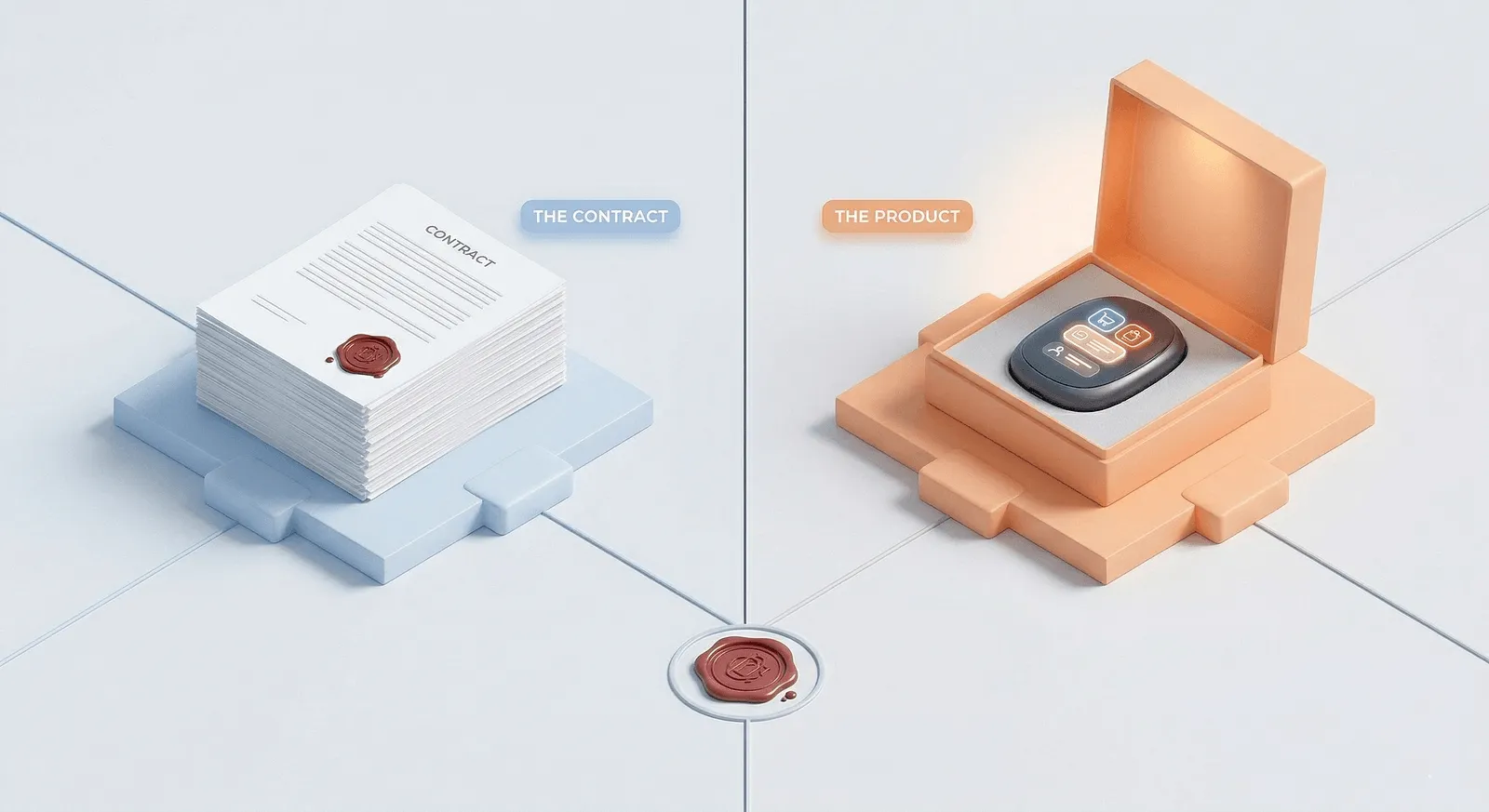
This means B2C product marketing is much closer to actual product work. I argue more about button labels and onboarding screens than I ever did in B2B. I care about the exact wording on the packaging and setup flow, because those are the first things a customer reads alone. Those choices are the marketing. There’s no salesperson coming in afterwards to explain what we meant.
Storytelling actually does mean different things
Both sides claim to be doing “storytelling,” and both are right. They’re doing different things.
In B2B, every story ends with a number. Pipeline up 40%. Net revenue retention at 128%. The narrative exists to justify that number. If your story doesn’t end with one, your champion has nothing to show their CFO and you lose.
B2C storytelling is identity. The functional pitch for a hardware wallet is “an offline device that protects your private keys.” Nobody buys based on that. People buy because they want to feel like someone who doesn’t need a bank’s permission to move their own money. The product is almost a prop in a story about the customer’s self-image.
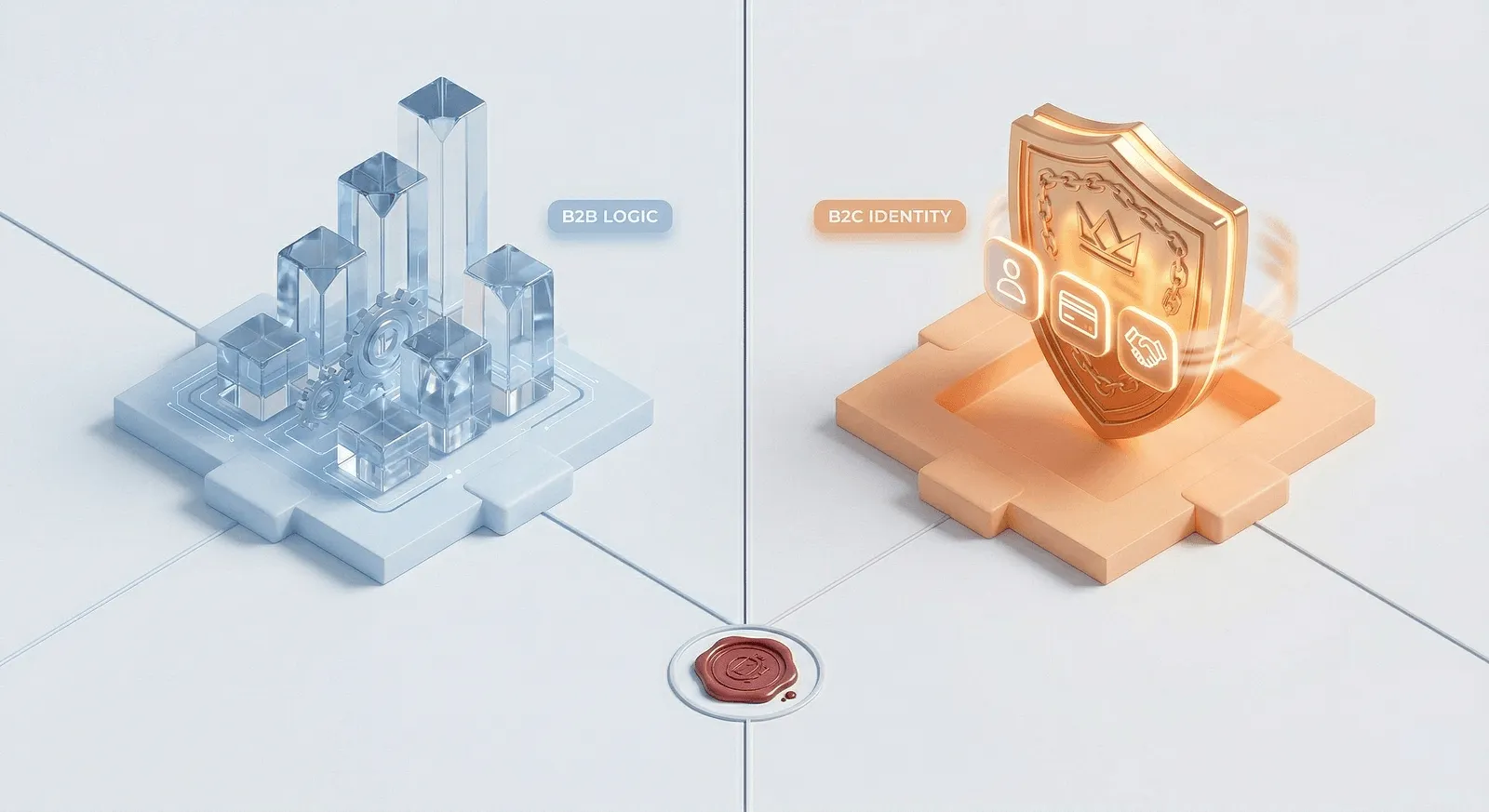
Neither approach works in the other context. Try selling identity to a procurement officer. Try selling pipeline velocity to a guy on Twitter who just lost coins on FTX.
Pick the right toolbox for the building you’re in
The PMMs I’ve seen succeed are the ones who are honest about which job they’re actually doing. The ones who try to run B2C playbooks at a B2B company make cute campaigns that don’t move pipeline. The ones who try to run B2B playbooks at a B2C company write 800-word landing pages that nobody finishes.

If you’re moving from one to the other, be ready to put down a few tools you were proud of. The positioning instinct stays. The writing stays. Almost everything else has to be rebuilt from scratch, and the worst thing you can do is pretend otherwise because you have a track record from the other side.
That nine-month deal review I opened with would be a disaster on a Trezor product page. The guy who bought a hardware wallet only because ChatGPT told him to would be a disaster in an enterprise sales cycle. Both work. Neither would survive being dropped into the other context.
Different building, different tools, same craft underneath if you respect what changed on the way in.